Conversations
What we're saying, what's being said, what should be said.
Dyson Keeps Asking the Right Question. Not Every Answer Has Been Worth Making.
Asking the right question isn’t enough. It has to be asked of the right problem.
I tend to overpay for well-designed things. A Dyson vacuum sits in our apartment closet, and one of their fans lives in the living room. Both work well, and neither quite feels worth what I paid, but that's not the point of this essay.
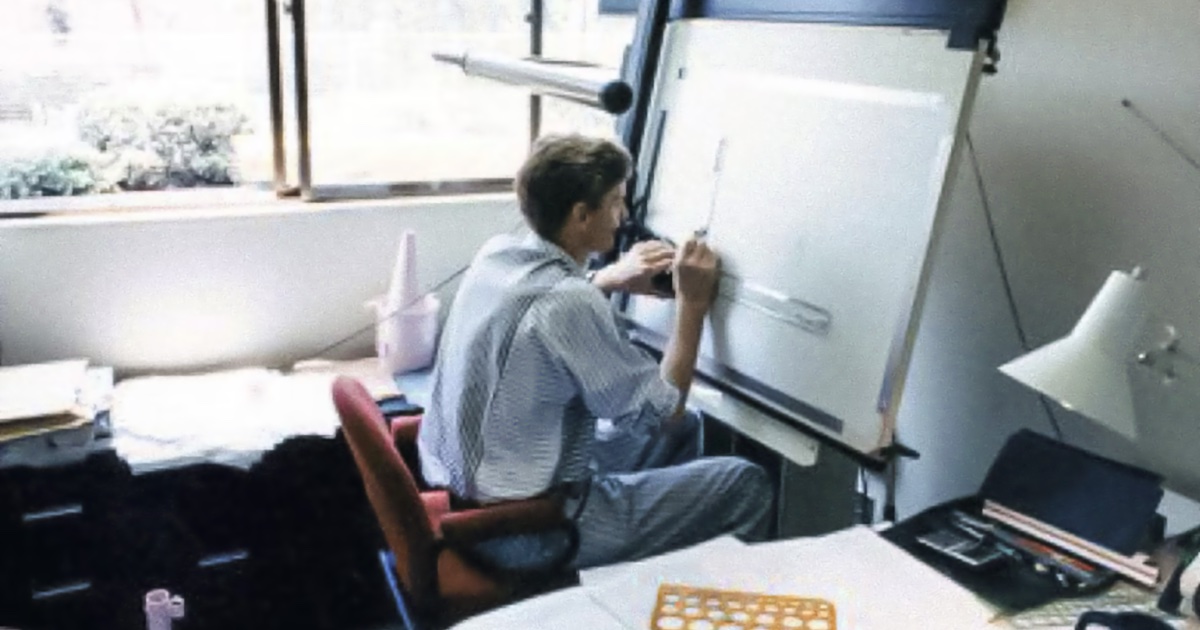
James Dyson began developing the first bagless cyclone vacuum cleaner in 1978. The suction loss problem was well known and widely accepted — as the bag fills, airflow is restricted, and suction drops. What nobody had done was refuse to accept it. Dyson's insight wasn't diagnosing the problem. It was deciding the problem was worth five years and 5,127 prototypes to solve properly, while he accumulated over $1 million in personal debt and his wife kept the family afloat by selling illustrations to British Vogue. By 1983, he had a final design and licensed it to a Japanese manufacturer, before eventually founding Dyson Ltd in 1991. Dyson now generates over $8 billion in annual revenue. That stubbornness in the face of an accepted limitation, sustained over thirteen years, is the founding question in its most essential form.
Dyson's stated mission is “solving the problems that others have ignored — solving them first, using our technology and ingenuity.” That phrase does more precise work than it appears to. The problems that others have ignored don't mean the problems are unsolvable. It just means it was decided they weren't worth solving, and everyone moved on. Dyson refused to accept that and, one by one, he built a company based on that refusal. If you read last week's essay about Theodore Levitt, this is what his transportation-oriented company looks like in practice: a brand that knows what business it's actually in. Dyson’s founding question has produced remarkable results when applied to categories where the ignored problem is real, universal, and within reach of an engineering solution. The bladeless fan. The Supersonic hair dryer. The Airwrap. Each arrived where the status quo was accepted rather than challenged, and each made its argument through the product itself: this is what this thing should have been doing all along. Dyson is speaking transportation, not railroad.
The Airblade is perhaps the clearest example. Public hand dryers in 2006 were too slow, too inefficient, and always hung on the wall across the bathroom from the sink, so everyone had to walk across the room with dripping hands and, once at the dryer, usually gave up before their hands were actually dry. It's also worth noting that damp hands spread up to 1,000 times more bacteria than dry ones, which makes the accepted limitation considerably less acceptable. The Airblade replaced the wide blast of heated air with two sheets of 400 mph unheated air, squeegee-ing the water off hands in 10 seconds rather than 43. Then in 2013, the Airblade Tap integrated the dryer into the faucet entirely, eliminating the walk across the bathroom altogether. That's not just a product improvement; that’s a company noticing that even their own solution had an accepted limitation and refusing to accept it.
In 2023, Dyson launched the Zone, noise-canceling headphones with a detachable air purifier face wrap. The product had been in development for five years, which means work began in 2018, before COVID. The pandemic briefly made the air-purification angle seem prescient — masks, air-quality anxiety, and urban commuting concerns all felt suddenly relevant. And then it didn't, and the Zone launched into a world that had moved past that specific fear that might have made it make sense. That's not an excuse for the product, but it's honest context for why a company that usually reads ignored problems correctly read this one wrong.
The Zone failed not because the engineering was poor but because the founding question was being applied to a problem the category hadn't ignored. Air purification for urban commuters is a real concern, but the market had already decided that a $949 device that made the wearer look, as one reviewer put it, “like a science fiction villain” was not the answer it was waiting for. Dyson had to clarify at launch that “this is no April Fool’s joke.” By mid-2025, the product was discontinued, having been marked down from $949 to $199 in its final weeks, and while it was still on sale, Dyson quietly changed the tagline from “Pure Audio. Pure Air. Anywhere” to “Pure Audio. Advanced noise cancellation” and removed the visor from promotional photos. That’s a brand editing its own claim while the product was still available, which clearly indicates they knew exactly how it had landed.
This week at IFA 2026 in Berlin, Dyson unveiled more than a dozen new products under the banner of “a new era of intelligent machines”. Robot vacuum cleaners, smart hair straighteners, air purifiers, and the CameraJet, a toothbrush with a built-in AI camera that identifies gaps between your teeth and jets mouthwash directly into them. The CameraJet is either the founding question applied correctly to a new category or a repetition of the Zone’s mistake, and while it's still too early to say which, watching yourself brush your own teeth on your phone is, shall we say, interesting.
The argument for it: oral hygiene is a category where the accepted limitations are real and universal. Most people brush imprecisely, miss the same spots every time, and have no feedback mechanism to know whether they’re improving. A toothbrush that identifies gaps and cleans them specifically is the founding question applied to a problem the category has ignored, and it's the same logic that produced the cyclone vacuum and the Airblade.
The argument against it: the Zone was also framed as the founding question applied correctly. The test isn't whether the problem exists, but whether the market has been waiting for this specific answer without knowing it. The bladeless fan made every fan with blades feel like an unanswered question the moment you used it. The Airblade made every paper towel dispenser feel like an accepted limitation that nobody should have kept accepting. If the CameraJet makes every other toothbrush feel like a question that was never properly answered, Dyson’s founding question is intact. If it makes people wonder whether a camera in their mouth isn't solving a problem they actually have, the Zone's ghost is present.
Dyson's brand has been built on the feeling of inevitability: products that make the status quo feel like a question that was never properly answered. That feeling is the Core Truth expressed through the product itself, and it’s the standard every new product either meets or doesn’t. The Zone didn’t meet it. The CameraJet will tell us whether Dyson still knows the difference between a problem the market has ignored and a problem the market has considered and declined.
What question is your brand’s product actually answering — and is it one your customer is genuinely waiting for someone to solve?