Conversations
What we're saying, what's being said, what should be said.
Nobody Owns the Döner Kebab
The döner is a €3.5 billion business. The man most often credited with it lived on a €395-a-month pension.
I'm in Germany, and today I had a Döner Kebab. I remember back in the 90s, when I lived here, how that meal was a staple for a young, just-out-of-college, poor fledgling architect. I still love them and have at least one every time I set foot in this country. But this deliciousness comes with a side dish: the importance of owning what you create.
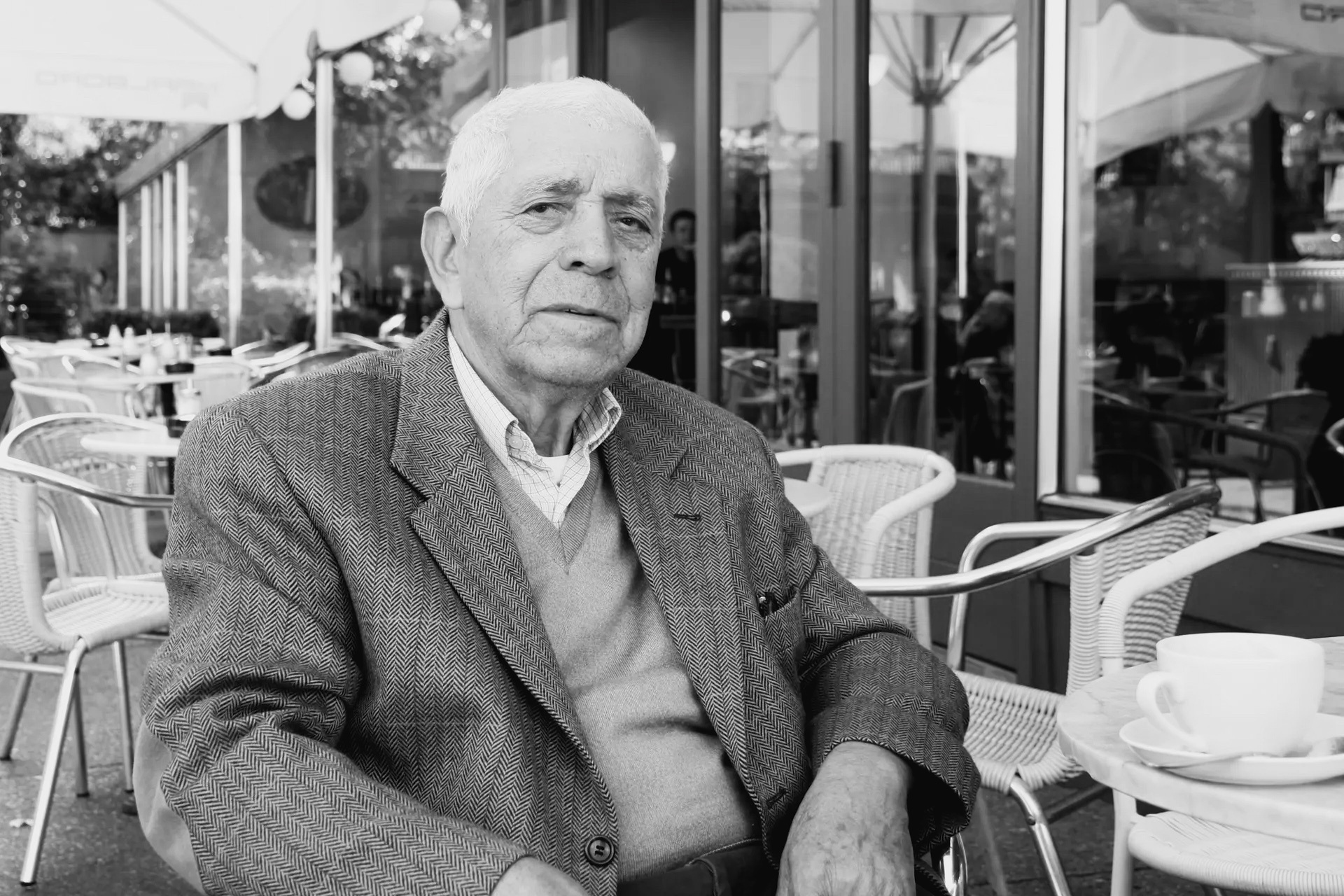
The most famous name in the Döner Kebab world was Kadir Nurman. At 26, he came to West Germany from Turkey in 1960, as part of the guest worker migration, and settled in Stuttgart (where I first lived). In 1966, he moved to West Berlin to work as a fitter on printing machines. Then, in 1972, he began selling meat in flatbread from a stand just opposite the Bahnhof Zoo station, and he was known for asking customers one question: "mit Scharf?" With spice?
When Nurman died in 2013, the Association of Turkish Döner Producers in Europe put the German döner business at €3.5 billion a year, with 600 tonnes of meat cooked every day. Berlin alone has more than a thousand döner shops. Nurman's own shop, according to Berlin Food Stories, closed in 2003. In 2011, the German news agency DPA reported that he lived on a pension of €395 a month and had never had his sandwich protected. He told Frankfurter Rundschau that year: "If I had known, I would have had it protected with a notary. Then I'd be a millionaire now."
What exactly he would have protected is harder to say than it sounds, because nobody can prove he was first. Mehmet Aygün, a Berlin restaurateur, says he made the first one in 1971. Nevzat Salim says he sold one in Reutlingen in 1969. A history in Berlin Food Stories lists five rivals and finds little or no evidence for their claims, then argues the bread version most likely started in Istanbul, at shops called büfes, sometime between the late 1950s and late 1960s. Wikipedia goes further and says the claims, Nurman's included, are widely considered inaccurate. Nurman himself didn't insist he was first and actually said someone else may have done it "in some hidden corner, but no one noticed." What he claimed was narrower: "Through me, the döner became known."
"No one noticed" is the part that surprised me because if nobody noticed, then nobody can prove it, so the credit goes to whoever has the best story and the most people willing to repeat it. A dated record from 1972 with his name on it is the one thing that would have given his claim something to stand on.
He also watched the sandwich change. In that same interview Nurman said what he thought of where it had gone. "In my opinion, there are too many ingredients in döner now." No seller in Berlin still mixed the meat himself, he said. They all had it delivered from factories. His own had been minced veal and beef, onions and a little green salad.
Think about what his complaint actually says. The person who knew what his sandwich was supposed to be didn’t figure out a way to own it. There was no name for the standard, no record of the original, and no company that could say, "This is what it is and this is what it isn't," so the market scaled it and changed it to suit itself.
The arguing never stopped. In April 2024, the International Döner Federation, based in Istanbul, applied to the EU to register the name döner as a traditional specialty. The proposed specification included how thick the meat could be sliced. Germany led the opposition, and in September 2025 the application was withdrawn, with no official reason given. More than a decade after Nurman died, a Turkish federation and German officials and producers were arguing in Brussels over what a döner is allowed to be.
In July, I wrote about TOTO, a company that held onto its answer for decades. Nurman's story is the other kind. Nobody should expect a guest worker with a food stand in 1972 to have thought about a trademark. He said as much himself. But this is what the absence costs, and anyone who builds something useful pays for it the same way. Without a name for the thing, a standard for it and a record of where it started, the answer belongs to whoever uses it. In 2011, an association of Turkish döner manufacturers gave Nurman a lifetime achievement award. That is what credit looks like when nothing else was built to carry it.
A useful solution finds its own market. It doesn't find its own owner.
If the market took your best solution tomorrow and ran with it, what would still be yours?