Conversations
What we're saying, what's being said, what should be said.
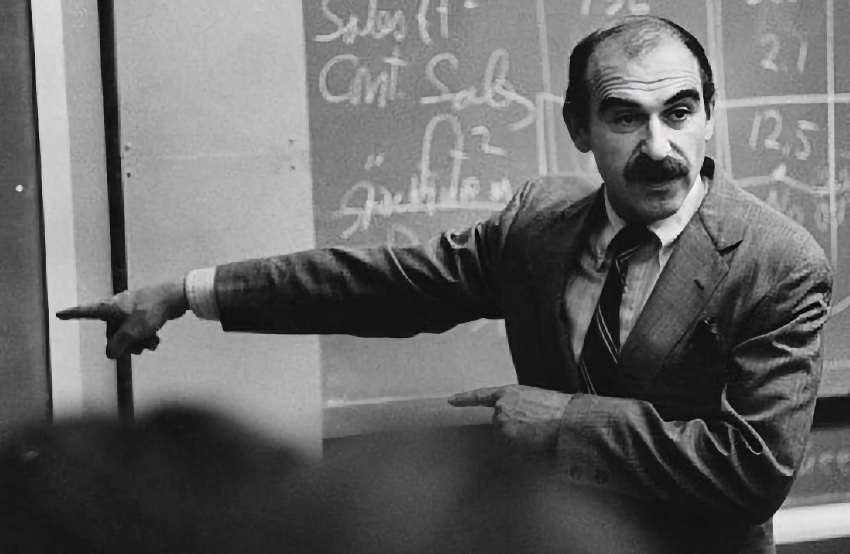
The Railroads Thought They Were in the Railroad Business. So Do Most Brands.
Theodore Levitt named this problem in 1960, and it's still hanging around.
In 1960, a Harvard professor named Theodore Levitt published an essay in the Harvard Business Review that should have permanently ended a particular kind of business failure. It didn't. His essay, "Marketing Myopia," has been reprinted more often than almost anything HBR has ever published. Sixty-six years later, it reads as if it was written last week, not because Levitt was ahead of his time, but because the problem he named hasn’t gone away.
Levitt's argument in a nutshell: Industries don't fail because markets shrink, but because companies define themselves around what they make rather than what customers actually need. The American railroads didn't decline because people stopped needing transportation. They declined because railroad executives thought they were in the railroad business rather than the transportation business. They were product-oriented instead of customer-oriented. They watched the automobile industry grow, and the airline industry emerge, and couldn't see either as a threat because neither was a railroad.
Hollywood made the same mistake. The major studios thought they were in the movie business. Television arrived, and they treated it as a competitor rather than what it actually was — a new distribution channel for entertainment, which, as we all know, was the business they were actually in. The ones that survived eventually figured that out. Most of them almost didn't.
Levitt's lesson was straightforward: the business is not the thing you make. The business is the need you serve. Industries learned that, more or less. But the same myopia operates today at brand scale, and it is just as invisible to the people inside it.
Because a brand that leads with what it makes rather than what the customer gets is doing exactly what Levitt's railroads did. The patent is not the business. The formula is not the business. The clinical trial is not the business. The customer need — specific, situated, personal — is the business. And many brands message as if the reverse were true.
"Clinically proven" is a product claim. It tells the customer what the brand has. "Your skin can actually absorb this" is a customer claim. It tells the customer what they get. Most brands in prestige beauty are speaking railroad when they should be speaking transportation.
Evologie, for example, is speaking transportation. "Most treatments fight the breakout. Evologie works with the skin." Same business as every other acne brand. Completely different frame. They lead with what the skin experiences, not what the product does. Their patents are the proof, not the point.
Apple has never been in the computer business, well, not really. From the Macintosh to the iPhone, every product Apple has made is an answer to one question: what does technology feel like when it's designed around the person using it rather than around the technology itself? Jobs was direct about this in 1998 — Apple's job wasn't to give customers what they asked for. It was to understand what they would want before they even knew they needed it. The products are simply the best current answer.
Both of them lead with what the product means. That is Levitt's transportation-oriented company operating at brand scale. What happens when a brand gets it wrong? He called it the self-deceiving cycle: the product gets obsessive attention, and the customer quietly disappears from the equation.
He wrote this in 1960 (before I was born) about oil companies and railroads. Walk through the beauty and wellness aisle of any major retailer in 2026, and the same cycle is visible in almost every direction. “Clinical-grade”. “Dermatologist-tested”. “Science-backed”. “Transformative.” Every brand is saying the same thing in slightly different typefaces, each one convinced that their product is so good it should speak for itself, and none of them seem to ask whether the person standing there in the aisle can tell the difference.
The gap between what a brand is actually worth and what it currently communicates is, at its core, a Levitt problem. The brand knows what it makes. It doesn't know what it means. Closing that gap isn't a communication exercise. It's the work of identifying what business the brand is actually in — and then building everything on top of that answer.
Levitt couldn't fix it in 1960. The essay has been read by millions of people and the railroads are still everywhere, speaking railroad.
What business is your brand actually in?