Conversations
What we're saying, what's being said, what should be said.
A Partnership Nobody Can See Is Just an Endorsement
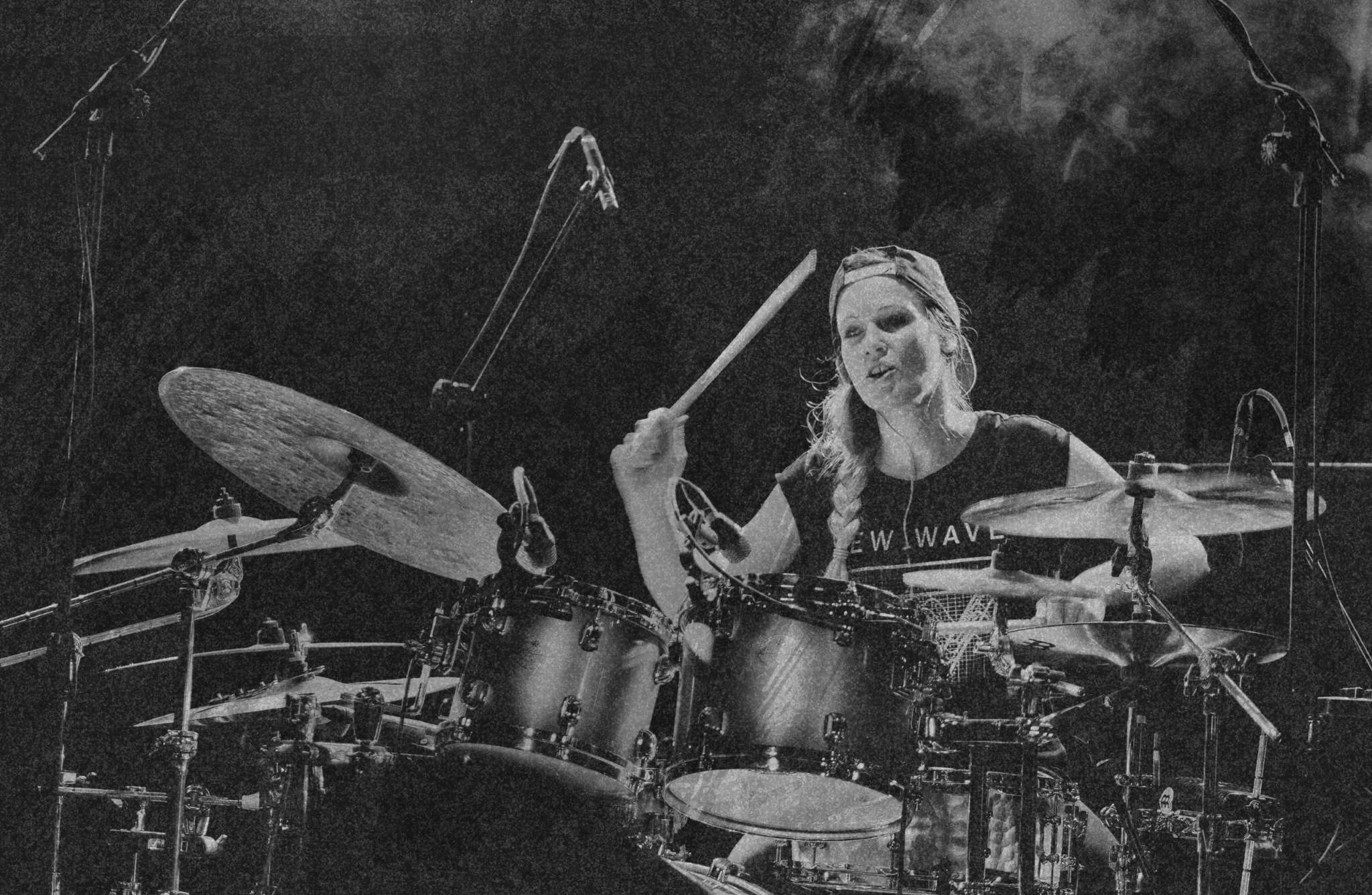
Anika Nilles's snare took two years and fifty prototypes. TAMA made sure people could see why.
A few weeks ago, TAMA released the AN1465, a signature snare drum designed with Anika Nilles. Nilles is a German fusion drummer who built an international following through YouTube before winning Modern Drummer's Reader's Poll for Up and Coming Drummer and being named number one Rising Star in Drum Magazine's Drummies Awards in both 2015 and 2016, before joining TAMA's artist roster in 2017.
That was an endorsement, and a good one: a rising drummer with a following, and a brand that wanted its name next to hers. Nothing wrong with that. It's how most of these relationships start, and it does its job, which is getting their name in front of people. What happened next is the part worth looking at.
TAMA recognized something in her before most people did. In 2026, Geddy Lee and Alex Lifeson recognized it too, and she was chosen to take the drummer's seat for RUSH’s "Fifty Something" tour, the seat the great Neil Peart held. As many of us know, those are really big shoes to fill, but she did it in spectacular fashion.
The snare they built together took two years and more than fifty prototypes, with Nilles focused on three specific things throughout the process: a deep low end that expands her expressive range, snare wire definition clear enough to preserve every note in the most intricate passages, and a look that reflects her lifelong connection to vintage drums. It was an engineering process, and her judgment drove every decision. TAMA's name is on the finished product because TAMA earned the right to put it there.
Her landing in Neil Peart's seat is a coincidence. What isn't a coincidence is that Neil Peart played TAMA through the years when RUSH made Permanent Waves, Signals and Power Windows. TAMA didn't need to manufacture a connection between one of its most celebrated artists and the drummer now filling his seat. The roster made it. Peart moved to TAMA because the drums sounded great and the company was eager to work with him, and he stayed with the brand through the mid-1980s. That's the kind of relationship TAMA keeps ending up in.
There is a real difference between endorsement and partnership. An endorsement or sponsorship is a brand paying someone to say they use the product. It buys attention, and attention is worth having. A partnership is when someone with high, exacting standards puts those standards into the product, and the brand spends years making it better with them. The first can grow into the second, but it doesn't have to, and often doesn't.
From the outside, the two look the same. Both put a name on the product, and both get the same sentence in the release: designed with, in collaboration with, blah, blah, blah. A brand that spent two years in the work and a brand that paid for a name can use identical words, and the customer has no way to tell them apart. So the work only counts if the brand can show it.
Collaborations are where this gets blurry. At their worst, a collaboration is just a two-way endorsement: Brand X Artist, limited edition, press release, both parties getting something for a defined period and the product being incidental to the arrangement. It's closer to a one night stand than a relationship. At their best, a collaboration becomes a partnership. We worked on one a few years ago, a pastrami pierogi from Veselka and Katz's Delicatessen. Remove either one and the product doesn't exist. Sometimes the judgment shows up on the outside instead. I wrote about Swatch and Audemars Piguet's Royal Pop in The Collaboration essay. AP's judgment is on the surface, and also inside the movement, in a balance spring developed with AP. Take either one away, and it's a different watch.
The test to apply to any collaboration, in any industry, is this: did both parties' judgment change the product, inside, outside or both? If yes, it's a partnership. If the product would be identical without one of them, it’s an endorsement with a better press release.
TAMA passes that test, and then does what most brands that pass never do: it shows the work. The three requirements are on the record. So are the two years and the fifty prototypes. A drummer who has never met Anika Nilles can see what she changed. It started as an endorsement in 2017, and the snare became what it is today. The AN1465 couldn't exist in its current form without her requirements driving every decision, or without TAMA's years of expertise in building drums to meet them.
Most brands that do this kind of work never say how it was done. Then it earns them no more than the brand that paid for a name.