Conversations
What we're saying, what's being said, what should be said.
The Collaboration
Swatch x Audemars Piguet. Supreme x Louis Vuitton. Ferrari x Jony Ive. What separates a collaboration that amplifies from one that dissolves?
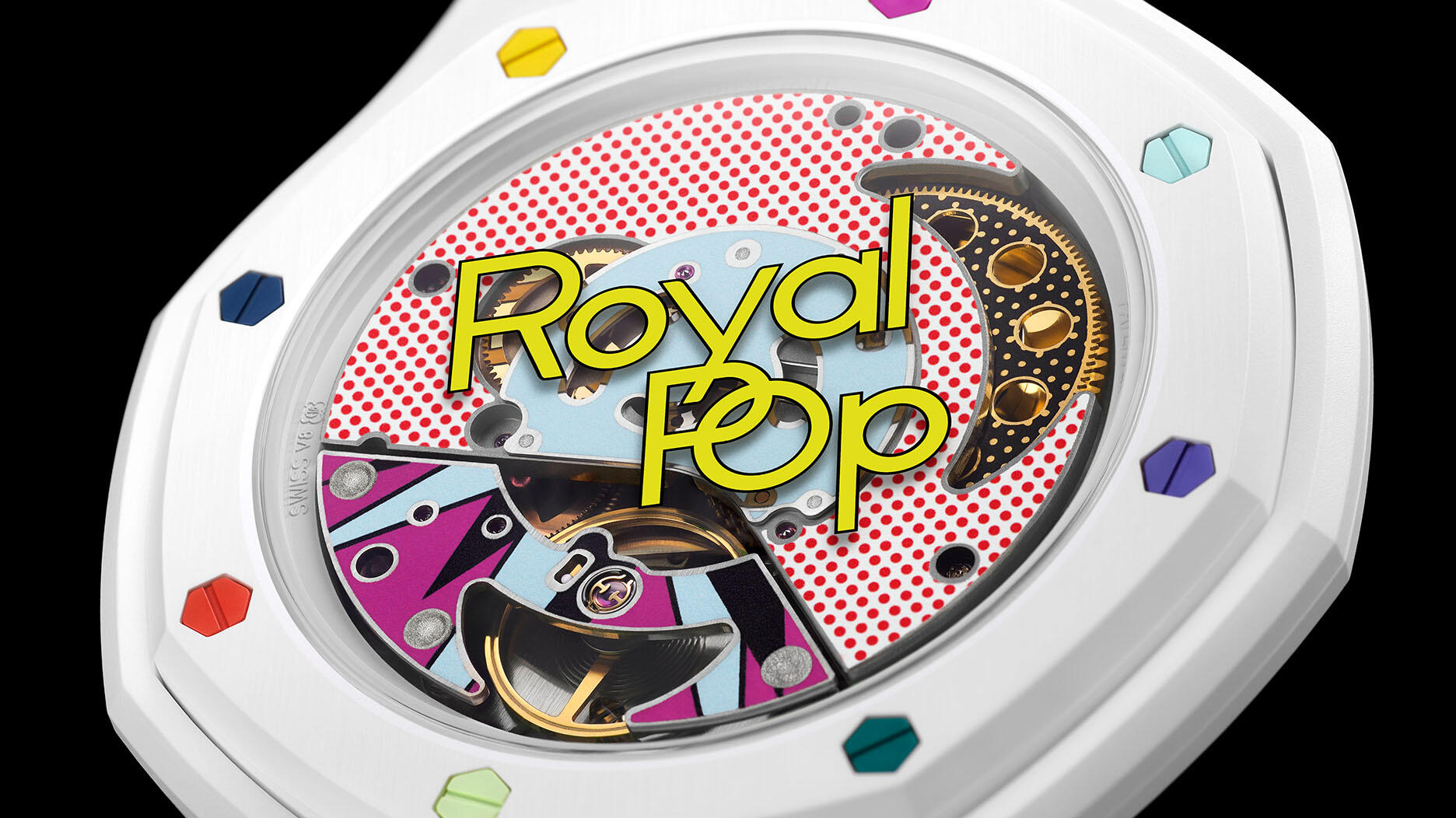
Three weeks ago, Swatch and Audemars Piguet released eight pocket watches called the Royal Pop. Lines formed outside Swatch stores. The internet divided immediately. Half the watch world called it genius. The other half called it the beginning of the end for AP.
Both sides are right about something.
A collaboration between a brand that makes $500 watches and a brand that makes $40,000 watches should not work. On paper, the association runs in one direction and one direction only — Swatch gains prestige by association with AP, and AP cheapens itself by association with mass production. That is the obvious read. But it's the wrong one if both brands actually know who they are.
AP knows who it is. The Royal Oak, designed by Gérald Genta in 1972, has one of the most recognizable silhouettes in the history of watchmaking. Octagonal bezel, exposed screws and an integrated bracelet, unchanged for over fifty years. The brand doesn't explain itself. It doesn't justify its price. It declares what it is and expects the market to arrive at the same conclusion independently. That is brand authority in plain sight.
Swatch knows who it is, too. Since 1983, it has been doing something no other watch brand does at scale: making Swiss mechanical watchmaking accessible, irreverent, and genuinely fun, without apologizing for any of it. The SISTEM51 movement at the center of the Royal Pop is the only Swiss-made mechanical movement assembled 100 percent automatically. The Nivachron balance spring inside it was developed in collaboration with Audemars Piguet. The technical connection is genuine, not cosmetic.
The Royal Pop draws from AP's Royal Oak and from Swatch's POP watches of the 1980s. Both brands reached back into their own histories and found the point where they could honestly intersect. That is what separates a collaboration from a licensing deal, where one brand rents its name to another. A collaboration is two brands choosing each other because the combination says something neither could say alone — the whole is greater than the sum of its parts.
The risk AP is taking is real and worth mentioning honestly. One Reddit post about the Royal Pop put it clearly: once people mentally associate the brand with a $500 price point, the $40,000 price stops seeming inevitable. The association might stick, and it also might not. AP is betting that its brand authority is deep enough to survive the experiment. Time will tell.
But consider the alternative. A brand that refuses every collaboration out of fear of dilution is a brand that has confused insularity with brand authority. The brands that last are not the ones that never take risks. They are the ones who understand their Core Truth well enough to know which risks reinforce it and which ones erode it.
Supreme and Louis Vuitton should not have worked either. A streetwear brand from downtown New York and one of the oldest luxury houses in France. The collaboration in 2017 sold out immediately and is still discussed as one of the most successful in fashion history. It worked because both brands knew exactly who they were. LV brought 160 years of craftsmanship and heritage. Supreme brought cultural currency, scarcity, and a community that couldn't be bought. Neither brand was diminished by the association, and both were amplified by it.
Target and Missoni in 2011 sold out in hours and crashed the Target website in the process. The collaboration worked because Missoni's design DNA — the specific, unmistakable zigzag pattern that belongs to no other brand — translated perfectly to a mass price point without misrepresenting either party. Missoni didn't become cheap. Target became interesting.
Then there is Adidas and Yeezy. Which is the cautionary tale from the collaboration side. A brand that built a meaningful part of its identity around a single collaborator and had to remove him when his public conduct became untenable. The surgery left Adidas with $1.3 billion in unsellable inventory and an association it couldn't shake fast enough. The collaboration had worked so well that the collaborator had become load-bearing. When he had to go, the structure was exposed.
The pattern across all of these is the same. A great collaboration requires two brands that know what they are. When both partners have a genuine Core Truth, the intersection creates something neither could have made alone. When one doesn't, the collaboration doesn't amplify — it absorbs. The stronger identity wins. The weaker one disappears into it.
Which means a collaboration is not just a marketing decision. It is a test. If you can explain immediately and specifically why a particular collaboration makes sense for your brand — what it says about what you actually are — then you're ready. If you have to construct the justification afterward, then you already have your answer.
The most recent test is the most interesting one. Ferrari and Jony Ive, unveiled last week. Five years in development, it’s Ferrari's first electric car. Designed by the man who gave Apple its visual language, the most direct living descendant of Dieter Rams' philosophy. The Ferrari Luce is a $640,000 bet that two of the most specific identities in design can produce something neither could alone. Whether Ferrari's brand authority survives the invitation for an outsider to define its most significant new chapter is the question the industry is currently debating. It may be the most interesting collaboration test of the decade.
The answer will tell us something about whether brand authority is a wall or a foundation.
Who would your brand choose, and why?