Conversations
What we're saying, what's being said, what should be said.
AI Doesn’t Lie. It Just Doesn’t Know the Difference.
The question took decades to build into law. AI just makes it easier to stop asking it.
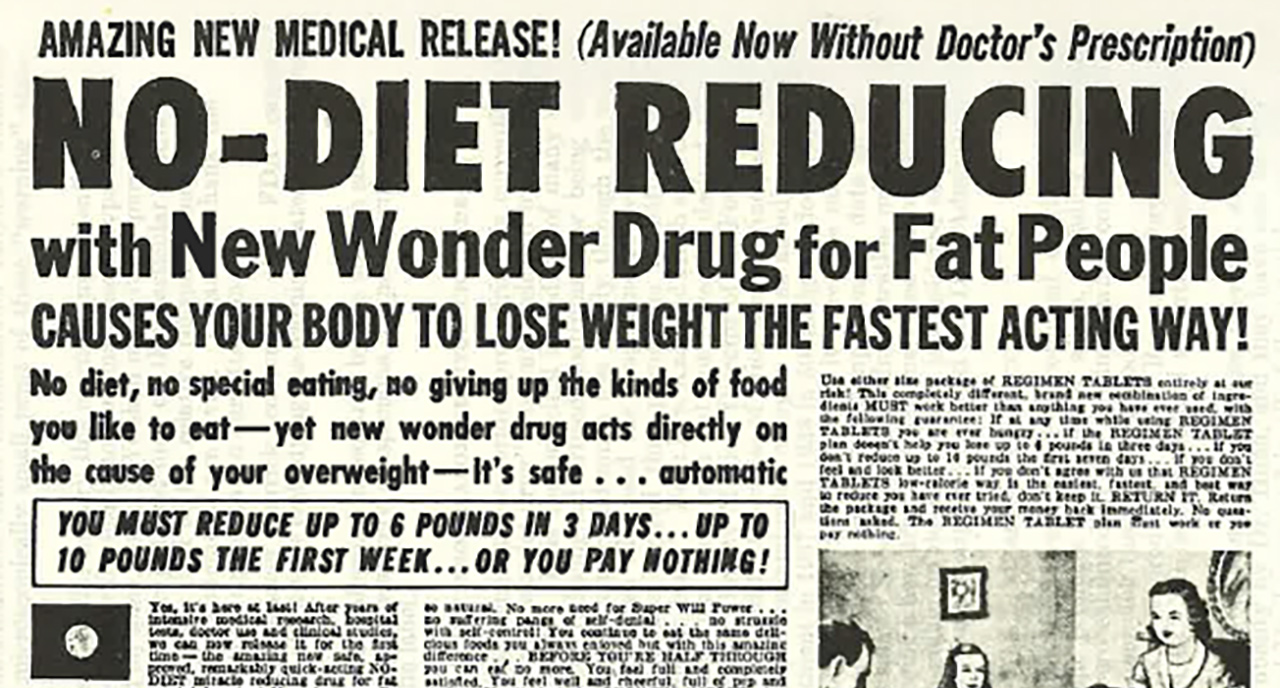
I’m sure most brands used to have someone whose job was to catch a claim before it went out; at least all the ones we’ve worked with did. Not officially, not always the same person, but someone: legal, the most paranoid person in the room, whoever had been schooled on it. Before "clinically proven" or "reduces the appearance of fine lines by 47 percent in eight weeks" made it onto a product page, that person asked one question: “Can we actually say this?”
That question built an entire century of advertising law, mostly by accident. The Federal Trade Commission (FTC) wasn't created to answer it, actually. When the agency was established in 1914, its job was breaking up trusts and curbing unfair competition between corporations, nothing to do with what companies told consumers. The consumer-facing version of the question arrived later, in 1938, when the Wheeler-Lea Act gave the FTC authority over deceptive practices that harmed people directly, with specific provisions for food, drugs, cosmetics, and therapeutic devices. By 1971, the agency had turned the question into a formal requirement: the Advertising Substantiation Program, which says an advertiser needs evidence for a claim before making it, not after.
The Food and Drug Administration’s (FDA) own history follows a similar arc. Its regulatory function dates to 1906, when the Pure Food and Drugs Act responded to a marketplace where adulterated food and mislabeled medicine circulated freely, and consumers had no way to know what they were actually buying. The agency wasn't renamed the FDA until 1930, and it wasn't until 1938, the same year Congress handed the FTC its consumer-protection authority, that the Federal Food, Drug, and Cosmetic Act gave the agency the specific tool that matters here: the line between a cosmetic and a drug. In beauty, this is the one that matters most. A cosmetic cleanses, beautifies, or alters appearance. A drug treats or prevents disease, or changes the structure or function of the body. Say "stimulates collagen production" or "reverses wrinkles" or "treats acne," and the product just became a drug in the eyes of the FDA, which means it now needs an Approved New Drug Application it almost certainly doesn't have. Miss that line and the claim is illegal, whether the brand meant it that way or not.
Neither agency built its rules around the claim itself. They built them around the assumption that a person made it and another person had a chance to check it first. AI doesn't intentionally break that checkpoint. Ask an AI to write skincare copy, and it produces something that sounds clinically confident by default, because that's how most marketing copy is already written. Nothing in the prompt tells it to hedge, so it doesn't. It has no idea that "stimulates collagen production" needs years of trial data behind it while "may improve the appearance of fine lines" doesn't, and unless someone tells it otherwise, it has no idea either claim needs checking at all. That's the part that matters: the copy reads like something that's already been verified, which is exactly why fewer people verify it. A carefully prompted, carefully reviewed version of the same AI could hold the line just fine. Most of what's actually shipping isn't that.
Now put an influencer into the mix, and the problem balloons. A brand generates copy with AI, drops it into an influencer brief, and the influencer runs it through their own AI tool before posting it to their followers. Neither person actually wrote what gets published. The FTC's endorsement rules require an endorsement to reflect a real, honest opinion, and this one reflects nothing: it's an AI's version of an AI's version of a claim nobody in the chain checked. Two humans touched it on the way to a consumer. Neither one asked if it was true.
The problem gets more literal than an unverified claim too. AI can now generate a realistic-looking person on video, reciting a script, presented as a customer testimonial. The FTC's Endorsement Guides require an actual endorser, someone with a real experience behind the words. An AI avatar has neither, which means a synthetic "customer" saying "I tried this and it worked" isn't an unverified claim. It's a fabricated person describing an experience nobody had.
What used to make this manageable was pace. A brand overstated something, and the FTC eventually caught it, investigated, and the brand corrected course. It was slow but matched to how fast a single false claim could spread on its own. That match breaks completely once AI-generated copy gets run through fifty influencers' different AI tools, prior to reaching tens of millions of people and before anyone at the brand has seen what actually went out. The FTC noticed, and in September 2024 it started to crack down on deceptive AI marketing, stating plainly: "There is no AI exemption from the laws on the books." It has brought a dozen cases since, and the pace hasn't slowed under the current administration.
Some of what gets caught is still the old story wearing a new tool: someone runs a claim through AI, sees that it's false, and publishes it anyway. That's still a choice, and still exactly what enforcement was built to find. But that's the smaller share of what's actually happening now. AI doesn't decide to deceive anyone, because it doesn't decide anything. It produces claims at industrial speed, optimized to persuade rather than to be accurate, and it only knows what the prompt tells it to know. Most people prompting it know the regulatory line exists. What they get wrong is assuming the AI knows it too, so they skip the check they'd normally run themselves. They aren't choosing to mislead. They're trusting a process that was never actually verifying anything.
The friction that used to slow all of this, one person writing a claim and another person reading it before it shipped, was what made room for the question to get asked at all. Social media doesn't have that friction. It moves whatever it's given, and influencers carry it further than any brand could reach alone, while the agencies meant to catch it are still filing cases one at a time against a volume of content no enforcement program was built to keep pace with.
I've written before about what it means when AI, trained on everyone else's creative work, starts generating the very signals brands built to prove they were real. This is another version of that problem. It's not just borrowed language anymore. It's borrowed verification, a claim that looks checked when nothing behind it ever was.
The brands that come out of this fine won't be the ones the FTC happened to leave alone. They'll be the ones that put a person back into the loop, because a brand running on claims it can't prove is running on borrowed authority, and borrowed authority gets a shorter shelf life every year the market gets better at telling real from plausible.
Can we actually say this? Still the right question. AI just made it easier to stop asking.
What claim is your brand making right now that you couldn't prove if someone asked?