Conversations
What we're saying, what's being said, what should be said.
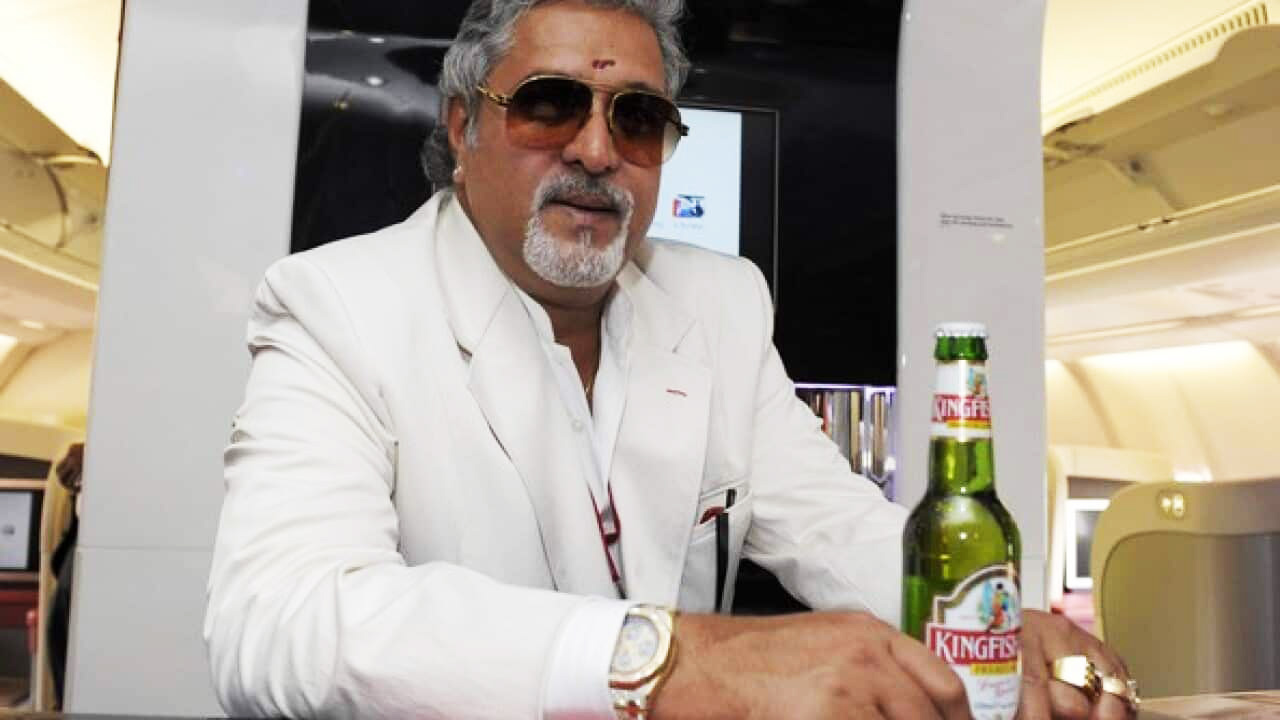
The Founder Became a Fugitive. The Beer Didn’t Notice.
Owned language isn’t what a brand says. It’s what people hear in the silence.
Jonina and I were in the back of a car somewhere between New Delhi and Jaipur. I don't remember the exact stretch of road, but I remember the heat, the kind that makes you think the air itself is tired. It was a long, dusty drive. I recall thinking to myself, but saying out loud, "I wish we had a couple of Kingfishers."
The driver heard me because he suddenly blurted out, "No problem, sir." Pretty much the only thing he had said up to that point.
He made a turn further down the highway, stopped in front of what I can only describe as a shack, jumped out, and returned a few minutes later with two ice-cold, super-sized Kingfisher beers.
The rest of the drive was great, BTW.
I've thought about that moment more times than makes sense for something that simple. Because what happened in that car is the thing every brand is trying to build and almost none of them do. The name alone, said accidentally in the backseat, in the middle of nowhere, was enough. No logo visible. No advertisement. The driver knew exactly what I meant (and where to get it, luckily). The word traveled without any supporting infrastructure, across languages, across a cultural gap, straight to exactly the right place.
That is owned language. Not the kind that sounds specific in a brief. The kind that actually works.
Kingfisher is India's most popular beer. It holds over 50 percent of the Indian market and is available in 52 countries. That number alone is interesting but not the story. This story is about how the brand got there — and what happened when the man who built it ran.
The brand dates back to 1857, when United Breweries first operated out of Bangalore. Vijay Mallya relaunched it as Kingfisher Premium in 1978 while working within the UB Group under his father, then took over as chairman of the entire group in 1983 at just 28 years old following his father's death. What he inherited was a respectable regional beer business. What he built was something way different — a lifestyle identity that sold aspiration, not just beer. Cricket. Formula One. Calendar girls. The kind of brand building that makes a name feel bigger than the product it's attached to.
What he faced, though, was a huge problem. The Advertising Standards Council of India banned alcohol advertisements entirely. Most beer companies treated this as a constraint. Mallya treated it as an opportunity.
UB Group launched Kingfisher mineral water. Not as a business, per se, but as a vehicle. The name, the colors, the identity — all of it now legally present on water bottles, in airports, on billboards, in every channel where alcohol couldn't go. It didn't confuse the market because the name already meant one thing. Nobody picked up a Kingfisher water bottle and thought water. The surrogate carried the beer into every space the beer couldn't legally enter.
The Wall Street Journal called it clever dodging of the alcohol advertising ban. That's accurate but undersells what actually happened. Clever dodging implies the goal was to survive the regulation. The real achievement was more interesting: Kingfisher built a name so owned that it could be attached to a completely different product and still point directly back to the original one. That's not clever advertising. That's a Core Truth expressed so completely that the name carries it without any other signal.
The water, incidentally, became a real business. Kingfisher holds roughly 17 percent of India's packaged drinking water market. The surrogate outlasted the strategy that created it.
When Kingfisher Airlines launched in 2005, the advertisements traveled into airplane cabins — another legal channel the beer couldn't officially use but the name could. By then, the name was everywhere. The driver somewhere between New Delhi and Jaipur who heard me in the back of a car had been living in a country where Kingfisher was on water bottles, in airports, on billboards, and eventually on the sides of planes. The word had been in the air for decades. The shack stocked it because the name meant the same thing to everyone.
Then, as the Attorney General of India said, "the bird has flown."
In March 2016, owing an estimated nine thousand crore rupees (approximately $1.3 billion at the time) to a consortium of seventeen banks, Mallya fled India. The Kingfisher Airlines collapse had been playing out for years in slow motion: unpaid salaries, canceled licenses, and mounting debt. The scandal was enormous. Mallya had been the face of the brand since he was twenty-eight. The name on the airline was his name. The lifestyle he'd built around Kingfisher beer had been, in many ways, a projection of his own personality — the parties, the Formula One team, the cricket franchise, the deliberate extravagance that made the brand aspirational.
He might have run, but the beer didn't notice.
Kingfisher remained India's number one beer with a market share above fifty percent and expanding distribution. Heineken eventually acquired a 61.5 percent stake in United Breweries in 2021, tipping the scales of a company Mallya had once ruled. The beer kept growing under new ownership, new management, a new corporate parent — completely separated from the man who had made it what it was.
This is the inverse of the Playboy problem. Playboy was built around Hugh Hefner so completely that when he died the brand had nothing to lounge in. The identity was the founder, and without him there was no identity, just a name attached to a legacy that had nowhere to go. Kingfisher was built around a lifestyle that belonged to a country, not a person. The aspiration Mallya attached to the name — good times, cricket, heat, cold beer — was never really his. It was already there; he just saw it and named it. The name survived because the truth underneath it was never his to take with him.
That's what owned language actually looks like when it's complete. Not language that sounds specific in a document. Language that means the thing so exactly that it works without the person who built it, without advertising, without a logo in sight, and in the back of a car on a long hot drive in rural India.
What does your brand's name mean when there's nothing else around to explain it?
Is your brand communicating all that it should? Signal Check will tell you: signal.skaggs.co