Conversations
What we're saying, what's being said, what should be said.
A Simple Question That Disrupted More Than Just an Entire Industry
Most brands answer a question. The successful ones keep asking it.
This week, I want to talk about the importance of a founding question. I was about 90% done with this essay when I saw a clip of Mehdi Hasan and Wajahat Ali discussing personal hygiene. The timing made me laugh, and their conversation did too, because they asked the same question TOTO did, and that's where this story starts.
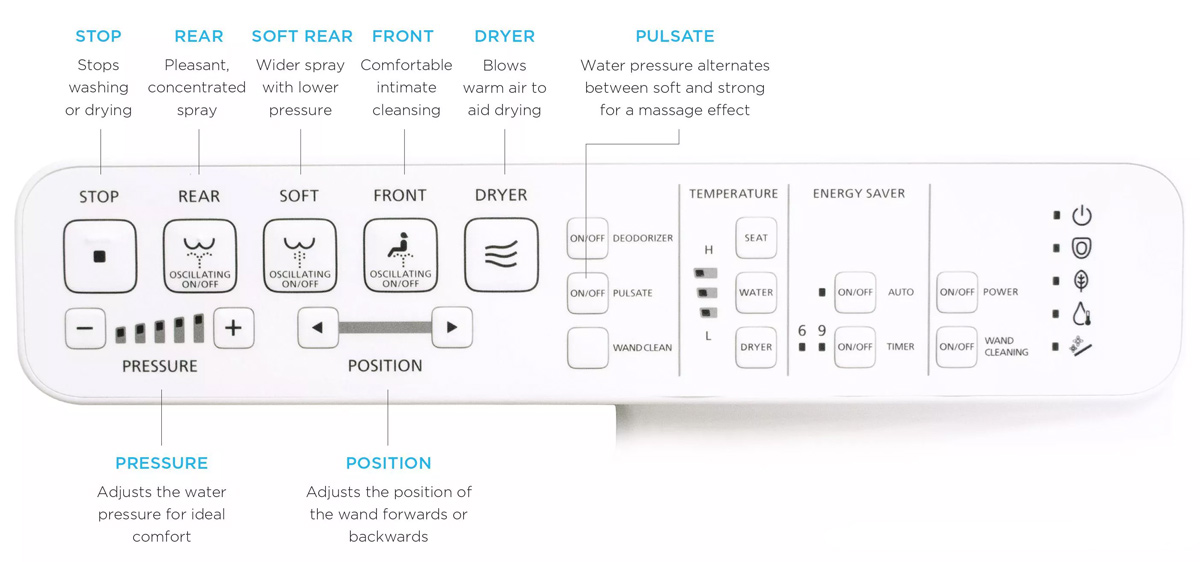
Skaggs worked with TOTO for years on several projects, including the Washlet, their signature toilet seat. I have owned one since, not that that matters. The story of how it got built is one of the cleanest (no pun intended) examples I know of a brand asking a question and refusing to stop asking it long after everyone else would have called it quits.
The device didn't start at TOTO. It started in a Brooklyn apartment in the early 1960s, with a man named Arnold Cohen trying to solve a problem for his father, who had a medical condition that made ordinary toilet paper painful (and no, I didn’t dig deeper into the research to know what that condition is). Cohen built a seat that sprayed warm water and blew warm air to cleanse. He patented it in 1964, calling it the American Sitzbath, and started the American Bidet Company. He took out ads. He went to trade shows. Almost nobody wanted to talk about it. "Ninety-nine percent of Americans did not know what a bidet was," he later recalled, "and I had a hard time marketing my product because anything to do with anything 'down there' was considered taboo."
Cohen had an answer to his question. The market told him his question didn't matter. Most people would have stopped there, but he got lucky and licensed the patent to a Japanese company and moved on.
That company was TOTO.
TOTO could have done what most companies do with a license like that — slapped their name on it, sold a few thousand units to hospitals and nursing homes, and called it a success. The Wash Air Seat, as TOTO first sold it, was exactly that kind of product: clinical, expensive, aimed at people with limited mobility. It failed in Japan for almost the same reason it failed in Brooklyn: nobody wanted to talk about it.
Instead, TOTO decided to ask a different question. Not "can we sell Cohen's device," but "why should anyone, sick or healthy, settle for paper when water does this better?" That question took the better part of a decade to answer properly. Through the 1970s, TOTO engineers took the bidet seat apart and rebuilt it as a company-wide project — solving water temperature, the angle of the spray so it wouldn't "backwash" onto the nozzle, the timing of an automatic system that didn't make you wait. Two of their engineers reportedly worked out the average physical position of the human body on a toilet using hundreds of data points, so the nozzle would find the right place without anyone adjusting it. This is not the work of a company trying to ship a licensed product before a deadline. This is the work of a company that had decided the answer to the question was worth getting exactly right.
The Washlet G launched in June 1980. Even then, the market didn't open its arms. People in Japan, same as people in Brooklyn fifteen years earlier, looked at it and said, essentially, what is this? TOTO didn't discount it into acceptance. They built demonstration vans and parked them at plumbing and home improvement shops so people could try it before buying it. They ran primetime television ads — unheard of for a toilet product — built around a single line: "When your hands get dirty, you don't simply wipe them with paper. You wash them." They let the question sit in public long enough for people to feel the obviousness of the answer for themselves.
It worked, and it kept working. And then it kept going long after "worked" would have been enough for most companies. The innovations kept coming — self-cleaning wands, premist, electrolyzed water — each one another answer to the same question. Forty-five years after the first Washlet G, TOTO is still answering the same question it could have stopped answering decades ago, with over 70 million units sold and household penetration above 80 percent in major Japanese cities. It's now a ubiquitous appliance, no different than a toaster or dishwasher. It took TOTO nearly two decades to sell its first 10 million Washlets. The most recent 10 million took just over three years.
And it isn't just a Japan story anymore. TOTO posted a sales surge of nearly 20 percent in the Americas in 2025, and by their own account, the U.S. is now the fastest-growing market for the Washlet in the world. The company traces the inflection point to an unglamorous moment: the toilet paper shortages of the COVID pandemic, when Americans suddenly had a very practical reason to ask the same question TOTO had been asking since the 1970s. People who would never have walked into a showroom and asked for a bidet started searching for one out of necessity, tried it, and didn't go back to paper.
None of that was the goal. The goal, as far as I can tell, was never market share. The goal was to answer the question.
That's the part worth sitting with if you run a brand. TOTO didn't out-market American Bidet. They didn't outspend INAX or Closomat, the European and Japanese competitors working on the same general idea. They simply refused to consider the question answered at the point where everyone else did. Cohen closed it at "this helps people who can't use toilet paper effectively." TOTO kept it open and arrived, decades later, at "this is simply a better way for anyone to be clean" — a much bigger and much more durable answer, because it wasn't tied to a narrow medical use case that would always stay a niche.
Most brands behave like Cohen, not TOTO. Not because they lack ambition, but because stopping feels like completion. You solve the problem in front of you, the product works, customers buy it, and closing the loop feels like the responsible thing to do. Cohen wasn't wrong to call it finished. He had a real product that helped his father and people like him. The instinct to declare victory and move on is reasonable almost everywhere else in business. It's just that the brands that end up mattering at scale are usually the ones where somebody refused to feel that sense of completion and kept treating a good answer as a draft.
And here’s the kicker. Because the question stayed open that long, the disruption it eventually caused went well past plumbing. European bidet manufacturers, who had a near-monopoly on water-based cleansing for a century, suddenly had a Japanese electronics-and-ceramics company showing up at their own trade shows with something their stand-alone fixtures couldn't match. American paper companies, which had never once considered a toilet seat manufacturer a competitor, are now watching bidet attachments and Washlet-style seats chip away at a category they assumed was permanent. The proof that the threat is now being taken seriously: 2025 alone brought a wave of competitors scrambling to respond. Kohler acquired a smart-toilet technology startup. Brondell acquired a regional distributor to widen its reach. TOTO itself took a stake in a North American distribution partner just to keep up with its own demand. Nobody in plumbing or paper saw TOTO coming, because TOTO never framed itself as a competitor to either one. It was just answering its own question. The disruption was a side effect of refusing to stop.
I think about this every time I hear a brand describe its plans as a roadmap with an endpoint. A roadmap implies the question gets answered, and then you move to the next item on the list. What TOTO did — what the most durable brands seem to do, in completely different categories — is closer to keeping one question open for as long as the company exists, and treating every product as the current best answer rather than the final one.
What question is your brand still willing to ask?